Your driveway endures more punishment than almost any other concrete surface on your property. It bears the weight of vehicles, withstands oil and chemical exposure, and faces the full brunt of Colorado Springs’ challenging climate. With elevation at over 6,000 feet, our city experiences intense UV radiation, dramatic temperature swings, heavy snowfall, and the relentless freeze-thaw cycles that can turn healthy concrete into a crumbling mess. The good news is that a consistent maintenance routine can dramatically extend the life of your driveway and help you avoid costly repairs. Here are the essential maintenance practices every Colorado Springs homeowner should follow.
Seal Your Driveway Every Two to Three Years
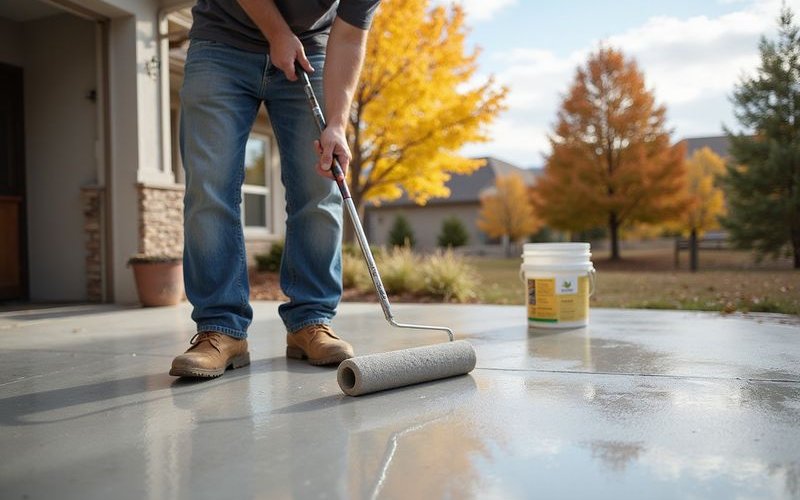
Professional concrete sealing is the single most effective preventive measure you can take for your driveway. We have found that a quality concrete sealer creates a protective barrier that repels water, resists staining, and shields the surface from UV damage. In Colorado Springs, where our high altitude means more intense sun exposure, unsealed concrete can fade, chalk, and deteriorate faster than in lower-elevation cities.
The “Breathable” Solution: Silane-Siloxane
When choosing a sealer, look for a penetrating concrete sealer rather than a topical coating. Our team specifically recommends Silane-Siloxane sealers for the Pikes Peak region. Unlike acrylics that sit on top, these penetrate deep into the pores and form a hydrophobic barrier while still allowing trapped moisture to escape. This “breathability” is critical in our climate because trapped moisture can freeze and pop off the surface layer of your concrete.
Sealing checklist:
- Perform the Water Bead Test: Pour a cup of water on your driveway. If it darkens the concrete immediately, you need to seal. If it beads up, you are still protected.
- Clean Thoroughly: Pressure wash the surface to remove dirt, oil, and old curing compounds before application.
- Check the Weather: Apply sealer when temperatures will remain above 50 degrees Fahrenheit for at least 24 hours.
- Wait for the Right Window: In Colorado Springs, late spring (after May 8th) and early fall typically offer the best conditions.
Address Cracks Immediately
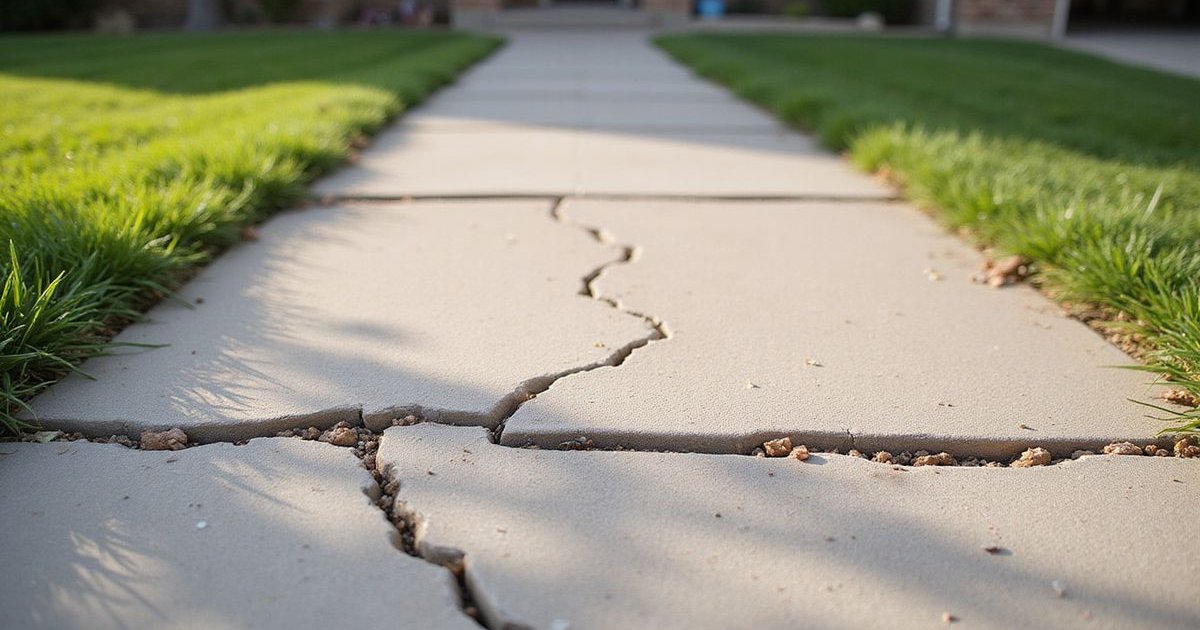
Small cracks in your driveway might seem cosmetic, but in Colorado Springs they are ticking time bombs. When water enters a crack and freezes, it expands by approximately 9 percent. This expansion widens the crack, allowing even more water to enter during the next thaw. Over the course of a single winter, a hairline crack can grow into a significant fracture that compromises the structural integrity of your slab.
The Role of Bentonite Clay
Much of Colorado Springs sits on top of Pierre Shale and expansive Bentonite clay soils. We often see these soils swell when wet and shrink when dry, causing significant movement under your driveway. This soil movement, combined with freeze-thaw pressure, makes prompt crack repair essential to prevent the subgrade from washing away.
Repair Strategy by Crack Width:
| Crack Size | Recommended Repair Material | Application Tip |
|---|---|---|
| Hairline (< 1/8 inch) | Liquid Concrete Repair / Bottle Filler | Overfill slightly to allow for shrinkage as it dries. |
| Small (1/8 - 1/4 inch) | Self-Leveling Polyurethane Caulk | Use a caulk gun for a steady bead. |
| Medium (1/4 - 1/2 inch) | Backer Rod + Polyurethane Caulk | Insert foam backer rod first to save caulk and improve flexibility. |
| Large (> 1/2 inch) | Professional Assessment | Indicates potential structural settling requiring leveling. |
For cracks up to half an inch wide, a quality concrete crack filler or flexible concrete caulking material designed for Colorado’s climate works well. For larger cracks or cracks that indicate settling, it is best to consult a professional to determine whether driveway leveling is needed to address the underlying cause.
Manage Drainage Effectively
Poor drainage is one of the leading causes of driveway damage and concrete settling in Colorado Springs. When water collects against or beneath your driveway, it saturates the soil, promotes erosion, and creates the void spaces that lead to settling and cracking.
Evaluate your driveway’s drainage by observing where water goes during a heavy rain. Water should flow away from your driveway and away from your home’s foundation. If you see pooling on the driveway surface, water running toward your garage, or erosion along the driveway edges, you need to address the drainage.
Effective drainage strategies include:
- Maintain Positive Grade: Your driveway should slope away from your home at a minimum rate of 1 to 2 percent (roughly 1/4 inch drop per foot).
- Extend Downspouts: We advise extending downspouts at least 4 to 6 feet away from the driveway edge to prevent roof runoff from undermining the slab.
- Install Channel Drains: For driveways that slope toward the garage, a channel drain (trench drain) across the base is often required by local code to intercept water.
- Pack the Edges: Ensure the soil along the sides of your driveway is compacted and sits slightly below the concrete level to prevent “damming” where water gets trapped on the surface.
Winter Snow and Ice Management
Colorado Springs averages around 55 inches of snowfall per year, and how you handle that snow on your driveway directly impacts the concrete’s longevity. Here are the best practices for winter driveway care:
Snow removal tips:
- Remove snow promptly before it compacts into ice.
- Use a plastic-edged shovel or snowblower to avoid scraping and chipping the concrete surface.
- Push snow away from the driveway rather than piling it along edges where meltwater will run back onto the concrete.
- Clear snow from expansion joints to prevent ice formation in these vulnerable areas.
The De-Icer Debate: Salt vs. Safety
Choosing the wrong de-icer can destroy your driveway in a single season. We strongly advise against using Rock Salt (Sodium Chloride) on concrete, as it causes surface scaling and spalling.
| De-Icer Type | Lowest Effective Temp | Concrete Safety | Notes |
|---|---|---|---|
| Rock Salt (NaCl) | ~20°F | Poor | Highly corrosive. Causes scaling. Avoid. |
| Magnesium Chloride | ~-13°F | Good | Less corrosive. Effective in extreme cold. Popular in CO. |
| Calcium Magnesium Acetate | ~20°F | Excellent | Safest for concrete and pets. Most expensive. |
| Sand / Kitty Litter | Any | Excellent | Provides traction only. No melting action. |
Smart Application: If you must use a melting agent, choose Magnesium Chloride. It is effective in our sub-zero cold snaps and is significantly gentler on concrete than rock salt. For a truly safe alternative, mix sand with a small amount of de-icer to get traction without the heavy chemical load.
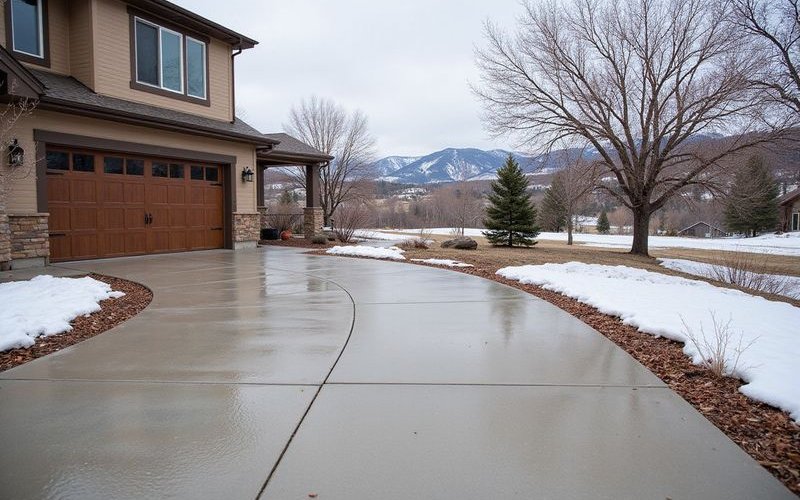
Protect Against Freeze-Thaw Damage
The freeze-thaw cycle is the number one enemy of concrete in Colorado Springs. Our climate regularly cycles above and below freezing, sometimes multiple times in a single day during shoulder seasons. Data shows our region experiences an average of 42 freeze-thaw cycles per year, which is significantly higher than many other parts of the country. Each cycle allows water to penetrate the concrete, freeze and expand, then thaw and penetrate deeper.
Beyond sealing, here are additional strategies to minimize freeze-thaw damage:
- Ensure proper air entrainment: If you ever need new concrete poured, insist on air-entrained concrete, which contains microscopic air bubbles that give expanding water somewhere to go without cracking the concrete.
- Eliminate standing water: Any water on the surface when temperatures drop will freeze and cause damage.
- Keep the surface clean: Dirt and debris trap moisture against the concrete, increasing freeze-thaw exposure.
- Monitor south-facing sections: These areas experience the most freeze-thaw cycles because daytime sun warms the concrete above freezing while overnight temperatures drop below.
Seasonal Maintenance Calendar
Staying on top of driveway maintenance is easier when you follow a seasonal schedule:
Spring (March through May):
- Inspect for winter damage including new cracks, spalling, and settling.
- Clean the entire driveway with a pressure washer to remove de-icer residue (magnesium chloride can leave a slick film).
- Fill any cracks that appeared over winter once the nightly temps stay above 40°F.
- Check drainage patterns and address any new pooling areas.
- Schedule professional leveling if settling is detected.
Summer (June through August):
- Apply Silane-Siloxane sealer if the “water bead test” fails (best done in early June).
- Remove oil stains and chemical spills promptly to prevent permanent discoloration.
- Keep expansion joints clear of weeds and debris.
- Monitor for any new cracking or movement during heavy monsoon rains.
Fall (September through November):
- Perform final crack repairs before the first hard freeze (typically early October).
- Clean leaves and debris that trap moisture.
- Verify drainage is working properly before the first snow.
- Stock up on concrete-safe de-icing products like Magnesium Chloride or CMA.
Winter (December through February):
- Remove snow promptly and use concrete-safe de-icers only.
- Avoid piling snow along driveway edges.
- Monitor for ice dam formation at garage entries.
- Document any settling or damage for spring repair.
When Maintenance Is Not Enough
Even with diligent maintenance, Colorado Springs’ soil conditions and climate can cause driveway settling that goes beyond what routine care can address. If you notice sections of your driveway sinking, tilting, or developing step-offs at joints, it is time to call a professional.
The Cost of Waiting vs. Repairing
Many homeowners worry about the price, but the data is clear. We estimate that in 2026, a full concrete replacement in Colorado Springs costs between $13 and $20 per square foot (including demolition). By comparison, professional leveling typically costs 50% to 70% less than replacement.
Driveway leveling can restore your driveway to its original position in just a few hours, at a fraction of the cost of replacement. When combined with ongoing maintenance, a professionally leveled driveway can serve your family for many more years.
At Colorado Springs Leveling, we help homeowners throughout the Pikes Peak region keep their driveways in top condition. Whether you need an assessment of settling issues or a full leveling service, contact us today for a free estimate. We will help you protect your investment and keep your driveway safe and beautiful through every Colorado Springs season.