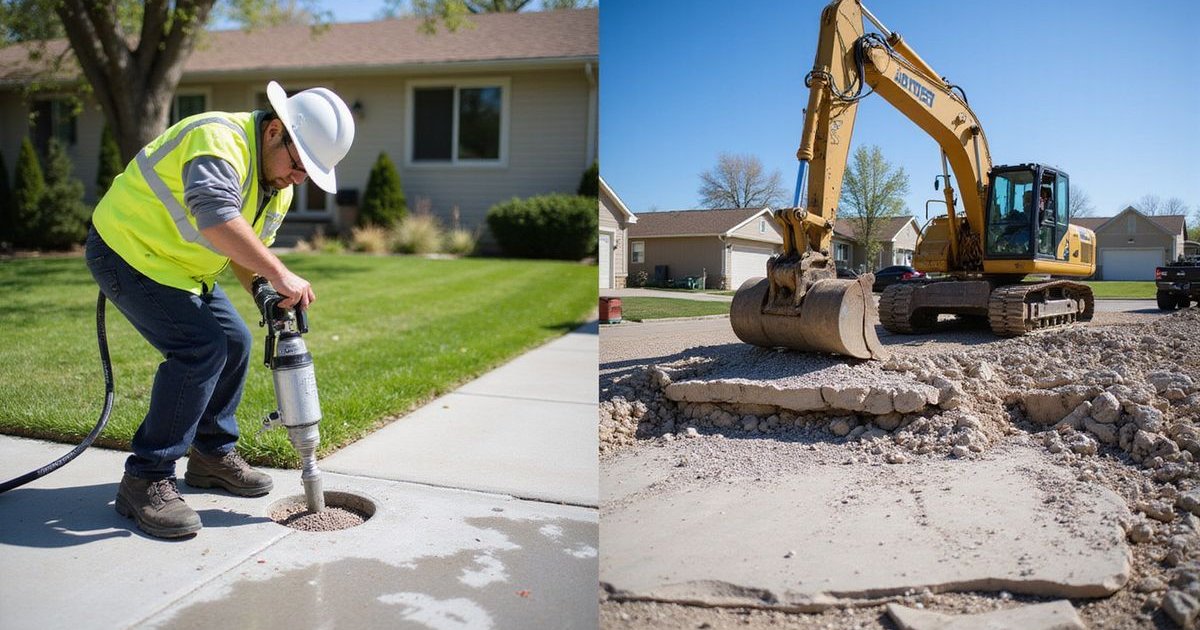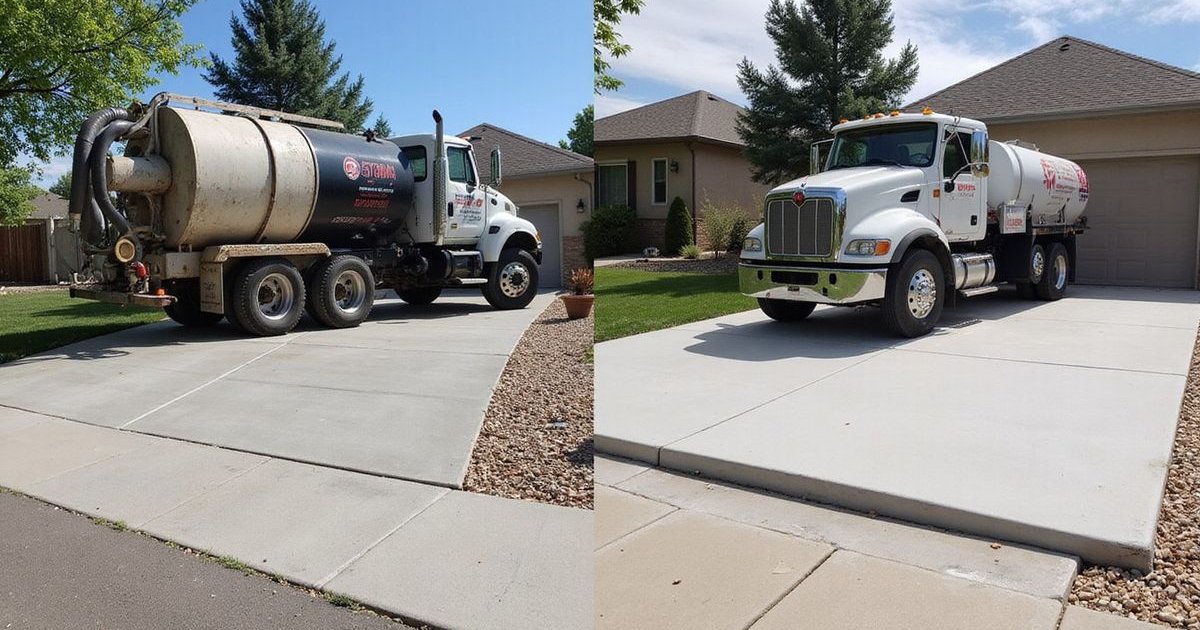
You notice it every time you pull into the driveway or walk up the front path. That uneven concrete slab isn’t just an eyesore; it is a tripping hazard that only gets worse with every freeze-thaw cycle we see here in Colorado.
We know how frustrating it is to watch your home’s curb appeal sink along with your sidewalk. Most homeowners think the only solution is a jackhammer and a total replacement.
Fortunately, you have two much faster options: traditional mudjacking and modern polyurethane foam leveling.
We have used both methods extensively to help residents reclaim their safe, level surfaces. Both techniques lift sunken concrete back to its proper position.
The way they achieve that lift is completely different.
This guide breaks down the specific mechanics, costs, and trade-offs of each method so you can make the right call for your property.
How Mudjacking Works
Mudjacking is the grandfather of concrete leveling and has been the industry standard since the early 20th century. It is a hydraulic process that relies on sheer volume and pressure to physically push a slab upward.
We start by drilling a series of holes through the sunken concrete. These holes are significant in size, typically measuring between 1 and 2 inches in diameter.
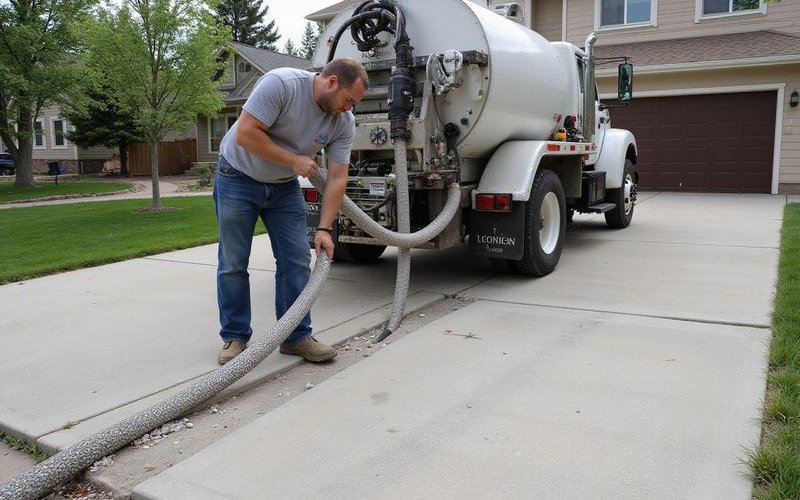
A thick mixture of water, topsoil, sand, and Portland cement—often called a “slurry”—is then pumped through a hydraulic hose into these holes. This semi-liquid mixture fills the voids underneath the concrete.
As the void fills, the pressure builds. Eventually, that hydraulic pressure becomes strong enough to lift the heavy slab back into place.
Once the leveling is complete, the crew patches the drill holes with fresh concrete. The slurry beneath needs time to cure and harden into a solid base.
While effective, this material is not waterproof. It remains susceptible to the same water erosion and soil shrinkage that likely caused your issue in the first place.
How Polyurethane Foam Leveling Works
Polyurethane foam leveling, often called “Polyjacking,” represents the modern evolution of this industry. Instead of relying on heavy hydraulic pressure, this method uses a chemical reaction to generate lift.
We begin by drilling holes that are much smaller than those used in mudjacking. These injection ports are only about 5/8 of an inch wide, which is roughly the size of a penny.
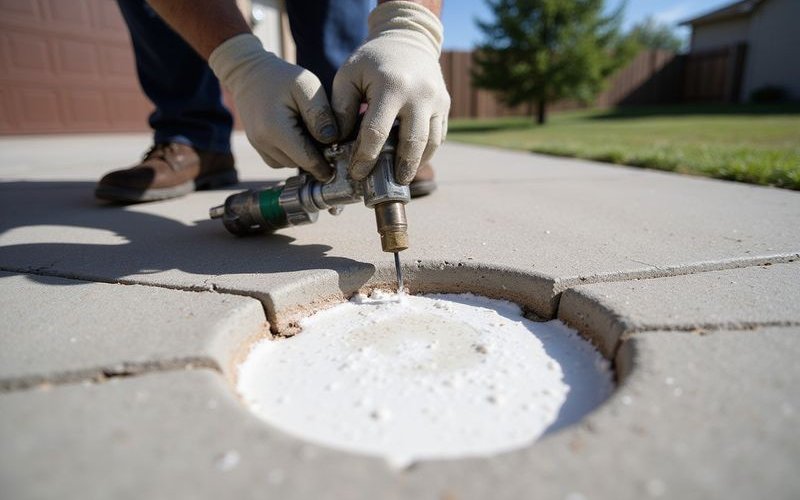
A two-part polyurethane polymer is injected through these ports as a liquid. As the two chemicals mix beneath the slab, a rapid reaction occurs.
The liquid expands into a high-density structural foam that fills every crevice and void in the soil.
This expansion generates a powerful upward force that lifts the concrete with incredible precision. The technician controls this lift within fractions of an inch by adjusting the amount of material injected.
Speed is a major advantage here. The foam reaches 90 percent of its final strength within 15 minutes.
You can park your car on the driveway almost as soon as the crew packs up their truck.
Side-by-Side Comparison
To help you visualize the differences, we have compiled the technical specifications of both methods.
The data below highlights the stark contrast in materials and outcomes:
| Feature | Mudjacking (Traditional) | Foam Leveling (Modern) |
|---|---|---|
| Material Base | Sand, Water, Cement (Slurry) | Two-Part Polyurethane Polymer |
| Hole Diameter | 1.6 to 2 inches (Soda can size) | 5/8 inch (Penny size) |
| Material Weight | Heavy (100-140 lbs per cubic ft) | Light (2-4 lbs per cubic ft) |
| Cure Time | 24 to 72 hours | 15 to 30 minutes |
| Water Response | Porous (Can wash away) | Hydrophobic (Waterproof) |
| Aesthetics | Visible, larger patch marks | Minimal, nearly invisible ports |
| Longevity | 2 to 5 years (average) | Indefinite (inert material) |
Cost Breakdown
Budget is often the first question homeowners ask us.
Mudjacking is almost always the cheaper option upfront. The materials—sand and cement—are inexpensive commodities.
For a standard two-car driveway in the Colorado Springs area, mudjacking generally costs between $3 and $6 per square foot.
We find that a typical residential project might range from $500 to $1,200 depending on the severity of the settling.
Polyurethane foam utilizes specialized synthetic materials that are more costly to manufacture.
You should expect to pay between $5 and $10 per square foot for foam leveling. That same driveway project would likely cost between $800 and $2,000 using this method.
However, the upfront price tag does not tell the whole story.
The Long-Term Value Equation
We encourage you to look at the “cost per year” of the repair.
Because mudjacking material can erode, it often needs to be redone every 5 to 7 years. Foam is an inert plastic that does not degrade in soil.
If you pay $1,000 for a mudjacking job that lasts 5 years, your cost is $200 per year. If you pay $1,500 for a foam job that lasts the lifetime of the concrete (20+ years), your cost drops to $75 per year.
Weight Considerations
The most critical technical difference between these methods is the weight they add to your underlying soil.
Mudjacking adds a massive amount of weight. The slurry weighs approximately 100 to 140 pounds per cubic foot.
If your concrete sank because the soil was too soft or poorly compacted, pumping thousands of pounds of wet concrete on top of it is often counterproductive.
We have seen cases where this added weight compressed the soil further, causing the slab to sink again within a year.
Polyurethane foam is incredibly lightweight. It weighs only 2 to 4 pounds per cubic foot.
This material provides the same lifting power without burdening the soil.
In areas with “expansive clay” soils—which are very common in our region—adding less weight is always the safer engineering choice.
Durability and Water Resistance
Water is the enemy of concrete stability.
Colorado Springs sees significant moisture fluctuation from winter snowmelt and spring rains.
Mudjacking slurry is porous. When water runs under your driveway, it can soak into the mudjacking material, causing it to soften or wash out completely.
We call this “washout,” and it is the leading cause of failed mudjacking repairs.
Polyurethane foam is a closed-cell plastic. It is hydrophobic, meaning it actively repels water.
This creates a waterproof barrier beneath your concrete. Even if drainage is poor, the foam will not rot, shrink, or wash away.
Aesthetic Impact
The visual result is another factor to consider.
Mudjacking requires drilling holes that are nearly 2 inches wide. Even when patched perfectly, these polka-dot patches on your driveway are noticeable.
The patches for foam leveling are tiny. Once filled with a matching grout, they often blend in with the natural aggregate of the concrete, becoming virtually invisible to the naked eye.
Cure Time and Convenience
Time is money, and convenience matters.
If you choose mudjacking, you must keep weight off the slab for at least 24 hours. In cooler weather, this cure time can extend to 72 hours.
We always advise customers that they cannot park in their driveway for a few days after a mudjacking service.
Foam leveling cures chemically rather than by drying.
The reaction is complete in about 15 minutes. You can drive your car onto the slab immediately after the crew leaves.
This is a major advantage for commercial businesses that cannot afford to close their entrance, or for homeowners who don’t want to park on the street for three days.
Best Applications for Each Method
Every project is different. Here is a quick guide to help you identify which method fits your situation.
Mudjacking works best for:
- Budget-Strict Projects: When the lowest upfront cost is the only priority.
- New Construction Mishaps: Lifting a slab that settled due to a one-time compaction error on stable soil.
- Non-Cosmetic Areas: Warehouse floors or rear service walks where patch visibility doesn’t matter.
Foam Leveling works best for:
- Residential Curb Appeal: Driveways, patios, and pool decks where looks count.
- Load-Sensitive Soil: Areas with clay or sandy soils that cannot support heavy slurry.
- High-Traffic Areas: Front walkways and driveways where you need immediate access.
- Complex Lifting: Jobs requiring precise leveling within millimeters.
Which Method Do We Recommend for Colorado Springs?
Our local soil conditions usually point to a clear winner.
Given the expansive clay and frequent freeze-thaw cycles in Colorado Springs, we generally recommend foam leveling for most residential applications.
The lightweight nature of the foam ensures we don’t overburden the soft clay soils. Furthermore, its waterproof properties protect the repair from snowmelt and drainage issues.
Mudjacking still has its place. It is a viable tool for specific commercial applications or scenarios where the sub-base is rock-hard and water isn’t a factor.
However, for a homeowner looking for a “one-and-done” solution, foam offers superior longevity.
Get Expert Advice for Your Project
You don’t have to guess which method is right for you.
At Colorado Springs Leveling, we assess the unique soil, drainage, and concrete conditions of your property before making a suggestion.
We believe in solving the root problem, not just patching the symptom.
Contact us today to schedule your free on-site evaluation. We will inspect your sunken concrete, explain your options clearly, and provide a fair estimate to get your home back on solid ground.